
Other conditions
Draft — pending owner review
Low QRS voltage
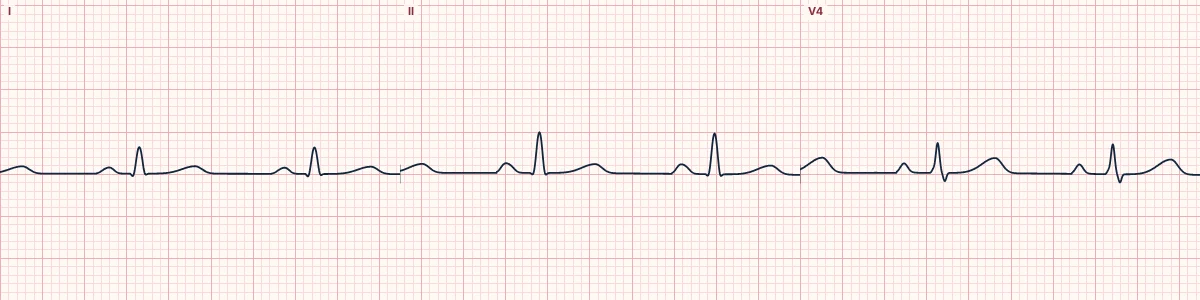
Small QRS complexes in every lead: under 5 mm in all limb leads, under 10 mm in all chest leads, or both. A clue to something between the heart and the electrodes, or to diseased muscle.
What the heart is doing
The current reaching the skin is small because less muscle is generating it (infarction, infiltration) or because fluid, air or fat between the heart and the electrodes weakens it.
Why it looks this way
This is low QRS voltage because every limb lead has a QRS under 5 mm and every chest lead under 10 mm, with otherwise normal intervals and rhythm.
Why it matters
Never a diagnosis in itself. New low voltage, especially with tachycardia or hypotension, should prompt echocardiography for effusion. Low voltage despite a thick ventricle on imaging suggests amyloidosis.
What to look for
- Check the calibration first: half-standard gain halves every complex.
- Measure the tallest QRS in each limb lead; all must be under 5 mm.
- With low voltage and tachycardia, look for electrical alternans and think of tamponade.
Frequently asked questions
What are the ECG criteria for low QRS voltage?
Limb leads: QRS amplitude < 5 mm (0.5 mV) in every limb lead. Chest leads: QRS amplitude < 10 mm (1.0 mV) in every chest lead. Measurement: peak-to-trough QRS height, at standard gain. Other findings: look for electrical alternans and tachycardia.
How is low QRS voltage identified on an ECG?
This is low QRS voltage because every limb lead has a QRS under 5 mm and every chest lead under 10 mm, with otherwise normal intervals and rhythm.
What can low QRS voltage be mistaken for?
Pericardial effusion with electrical alternans: QRS size alternates beat to beat. Hypothermia: Osborn waves, bradycardia and long intervals. Normal ECG at half gain: the calibration pulse is 5 mm tall.
What causes low QRS voltage?
Common causes: pericardial effusion and tamponade; obesity, emphysema, pleural effusion, anasarca; infiltrative cardiomyopathy (amyloidosis); extensive infarction or dilated cardiomyopathy; hypothyroidism (myxedema); and constrictive pericarditis.