
Electrolytes, drugs and toxins
Draft — pending owner review
Digoxin toxicity
Too much automaticity, too little conduction
Digoxin toxicity can cause almost any arrhythmia, but the classic ones combine faster firing with slower AV conduction: atrial tachycardia with block, accelerated junctional rhythm, bidirectional VT, frequent PVCs and AV block.
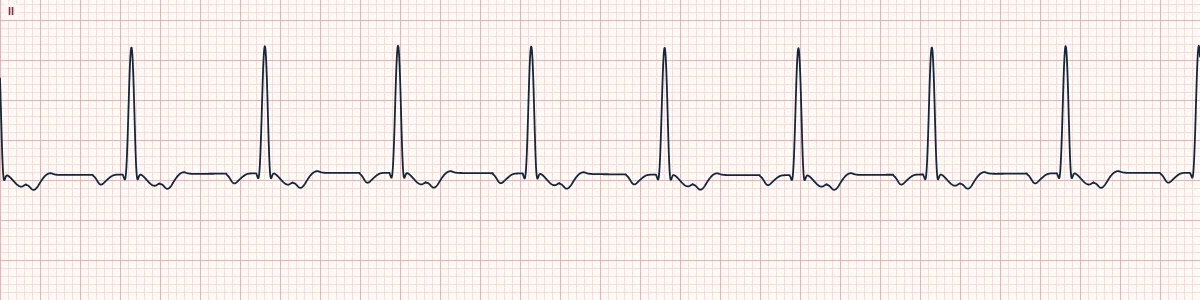
Effect versus toxicity
Scooped ST depression, a short QT and flattened T waves (the digoxin effect) show only that the drug is present, at therapeutic or toxic levels. Toxicity is a clinical and rhythm diagnosis: nausea, visual change or confusion with a new arrhythmia.
The rhythms
Ectopic atrial tachycardia with 2:1 or variable block; a slow, regular ventricular response in known atrial fibrillation (junctional rhythm with AV dissociation); accelerated junctional rhythm; ventricular bigeminy and multifocal PVCs; bidirectional VT; and sinus bradycardia or any degree of AV block.
Why it happens
Digoxin blocks the sodium-potassium pump. Calcium builds up inside cells and triggers extra beats through delayed afterdepolarizations, while increased vagal tone and a direct effect slow the AV node.
Who is at risk
Older people, kidney impairment, low potassium or magnesium, high calcium, hypothyroidism, and drugs that raise digoxin levels such as amiodarone and verapamil. In acute overdose a high potassium marks severity.
About the demonstration
The tracing shows atrial tachycardia with 2:1 block plus the digoxin effect on the ST segment. Open bidirectional ventricular tachycardia for the other signature rhythm.
How to read it
- In a patient taking digoxin with a new rhythm, assume toxicity until proven otherwise.
- Look for P waves at 150–250/min between the QRS complexes.
- Check potassium, kidney function and a drug level.
Pitfalls
- The scooped ST segment alone is not toxicity.
- A regular rhythm in someone with known AF may be a toxic junctional rhythm, not a return to sinus.
Frequently asked questions
Digoxin toxicity: what is the key idea?
Digoxin toxicity can cause almost any arrhythmia, but the classic ones combine faster firing with slower AV conduction: atrial tachycardia with block, accelerated junctional rhythm, bidirectional VT, frequent PVCs and AV block.
Digoxin toxicity: what are the key numbers?
Classic rhythm: Atrial tachycardia with block; Highly suggestive: Bidirectional VT; Clue in known AF: A regular, slow ventricular rate; Risk factors: Kidney impairment, low potassium, low magnesium.
Digoxin toxicity: how do you apply it to an ECG?
In a patient taking digoxin with a new rhythm, assume toxicity until proven otherwise. Look for P waves at 150–250/min between the QRS complexes. Check potassium, kidney function and a drug level.
Digoxin toxicity: what are the common pitfalls?
The scooped ST segment alone is not toxicity. A regular rhythm in someone with known AF may be a toxic junctional rhythm, not a return to sinus.