
Paced
Pacemaker failure to capture
The pacemaker fires, but some impulses fail to depolarize the heart. Spikes appear on time with no QRS after them.
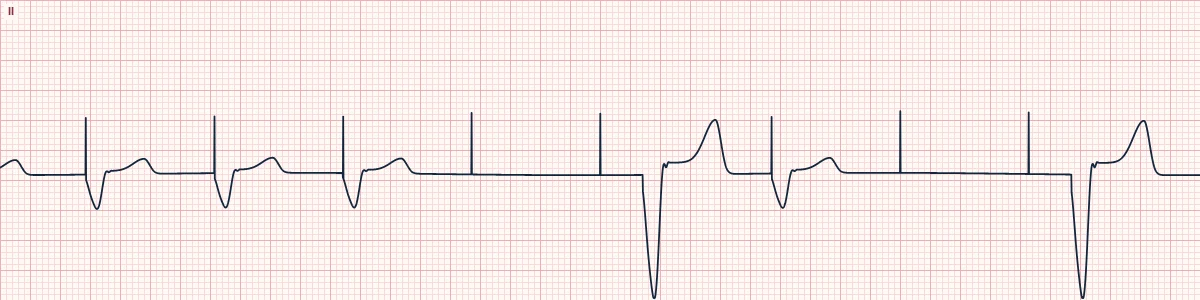
What the heart is doing
The stimulus is delivered but is too weak, or reaches tissue that cannot respond, so the ventricle does not depolarize. The heart then relies on any slow escape pacemaker it has.
Why it looks this way
This is failure to capture because pacing spikes occur on schedule but some are not followed by a QRS complex.
Why it matters
Potentially life-threatening in a patient who depends on the pacemaker. Treat the patient's bradycardia, be ready for external pacing, correct metabolic causes and arrange urgent device interrogation.
What to look for
- Spikes that stand alone with no wide QRS and T wave behind them.
- Spike-to-spike timing is regular, which shows the device is firing on schedule.
- Wide beats with no spike in front are the patient's own escape beats.
Frequently asked questions
What are the ECG criteria for pacemaker failure to capture?
Rate: slower than the programmed pacing rate. Rhythm: irregular, with pauses. Pacing spikes: regular; some not followed by a QRS. QRS: wide after captured spikes; slow escape beats may appear. Pauses: lone spikes on a flat baseline.
How is pacemaker failure to capture identified on an ECG?
This is failure to capture because pacing spikes occur on schedule but some are not followed by a QRS complex.
What can pacemaker failure to capture be mistaken for?
Failure to pace (no output): expected spikes are missing altogether. Normal pacing: every spike is followed by a QRS. Failure to sense: spikes appear where they should have been withheld.
What causes pacemaker failure to capture?
Common causes: lead dislodgement or fracture; battery depletion; raised threshold from infarction or fibrosis at the lead tip; hyperkalemia, acidosis; antiarrhythmic drug effect; and output set too low.