
Electrolytes, drugs and toxins
Draft — pending owner review
Carbamazepine cardiotoxicity
A sodium-channel blocker in overdose
In overdose carbamazepine blocks sodium channels much like a tricyclic: sinus tachycardia, a wide QRS and a terminal R wave in aVR. At therapeutic levels it occasionally slows the sinus and AV nodes in older people.
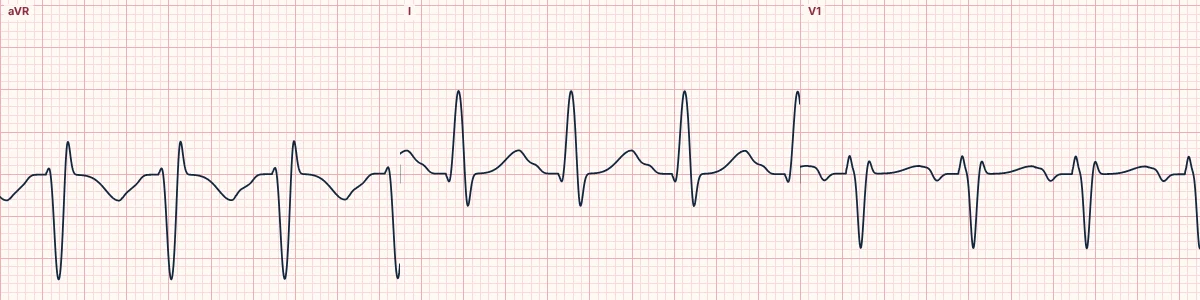
Overdose
Anticholinergic effects give sinus tachycardia; sodium-channel blockade widens the QRS and adds a rightward terminal deflection, an R wave in aVR and a deep S wave in I. QT prolongation and AV block are less common.
At therapeutic levels
Older patients, especially women, can develop sinus bradycardia, sinus pauses or AV block, which may present as falls or fainting.
Why it matters
Absorption is slow and erratic, so levels can keep rising for a day or more. Repeat the ECG alongside drug levels and watch the QRS.
About the demonstration
The tracing shows the sodium-channel blocker pattern that carbamazepine shares with tricyclic overdose.
How to read it
- Measure the QRS and look at aVR.
- Repeat the ECG as levels rise.
- Look for seizures and anticholinergic signs.
Pitfalls
- A single early ECG can underestimate the toxicity.
Frequently asked questions
Carbamazepine cardiotoxicity: what is the key idea?
In overdose carbamazepine blocks sodium channels much like a tricyclic: sinus tachycardia, a wide QRS and a terminal R wave in aVR. At therapeutic levels it occasionally slows the sinus and AV nodes in older people.
Carbamazepine cardiotoxicity: what are the key numbers?
QRS: Widening, terminal R in aVR; Overdose rate: Sinus tachycardia; Therapeutic levels: Occasionally bradycardia, pauses or AV block in older adults; Course: Delayed, prolonged absorption.
Carbamazepine cardiotoxicity: how do you apply it to an ECG?
Measure the QRS and look at aVR. Repeat the ECG as levels rise. Look for seizures and anticholinergic signs.
Carbamazepine cardiotoxicity: what are the common pitfalls?
A single early ECG can underestimate the toxicity.