
Overviews
Draft — pending owner review
The ECG in poisoning
Five questions to ask of every overdose ECG
In any overdose the ECG answers a few questions quickly: is the QRS wide, is the QT long, is the rate dangerously fast or slow, is there AV block, and is there a pattern that names the drug?
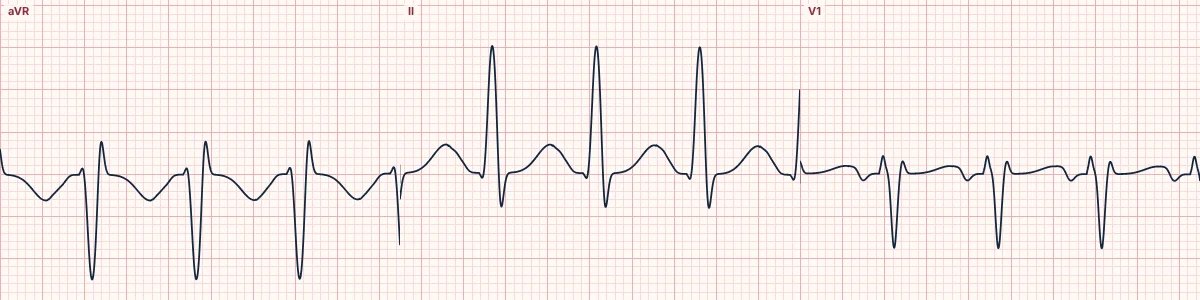
Sodium-channel blockade
A QRS over 100 ms, a rightward terminal deflection (an R wave in aVR over 3 mm, or an R/S ratio in aVR over 0.7) and sinus tachycardia point to sodium-channel blockade: tricyclic antidepressants, class I antiarrhythmics, carbamazepine, diphenhydramine, cocaine and others. A QRS over 160 ms raises the risk of ventricular arrhythmia.
Potassium-channel blockade
A long QTc, and the torsades it can trigger, follows many antipsychotics, antiemetics, antibiotics, antiarrhythmics and methadone. The risk climbs steeply above 500 ms and with bradycardia, low potassium or low magnesium.
Slow rhythms and AV block
Beta-blockers, calcium-channel blockers, digoxin and clonidine slow the sinus and AV nodes: sinus bradycardia, junctional rhythm and every degree of AV block.
Fast rhythms
Stimulants, anticholinergic drugs and withdrawal states cause sinus tachycardia. A fast rate becomes dangerous when the same drug also widens the QRS or lengthens the QT.
Patterns that name the drug
Scooped ST depression with atrial tachycardia and block, or bidirectional VT, suggests digoxin. A Brugada pattern can be unmasked by sodium-channel blockers. Hyperkalemia patterns follow potassium-sparing drugs and kidney injury.
How to read it
- Measure the QRS width and look at aVR on every overdose ECG.
- Measure the QTc and correct for rate with care: fast rates distort it.
- Repeat the ECG: drug effects evolve as the drug is absorbed.
Pitfalls
- A normal first ECG does not exclude a toxic ingestion, especially with slow-release drugs.
- Mixed overdoses produce mixed patterns.
Frequently asked questions
The ECG in poisoning: what is the key idea?
In any overdose the ECG answers a few questions quickly: is the QRS wide, is the QT long, is the rate dangerously fast or slow, is there AV block, and is there a pattern that names the drug?
The ECG in poisoning: what are the key numbers?
QRS: > 100 ms: sodium-channel blockade; aVR: Terminal R wave > 3 mm; QTc: > 500 ms: high torsades risk; Slow and blocked: Beta-blocker, calcium-channel blocker, digoxin.
The ECG in poisoning: how do you apply it to an ECG?
Measure the QRS width and look at aVR on every overdose ECG. Measure the QTc and correct for rate with care: fast rates distort it. Repeat the ECG: drug effects evolve as the drug is absorbed.
The ECG in poisoning: what are the common pitfalls?
A normal first ECG does not exclude a toxic ingestion, especially with slow-release drugs. Mixed overdoses produce mixed patterns.