
Electrolytes, drugs and toxins
Draft — pending owner review
Quetiapine toxicity
Tachycardia and an apparently long QT
Quetiapine overdose typically causes sinus tachycardia and a QT that looks long, with low blood pressure and sedation. Torsades is uncommon, partly because the fast rate protects against it.
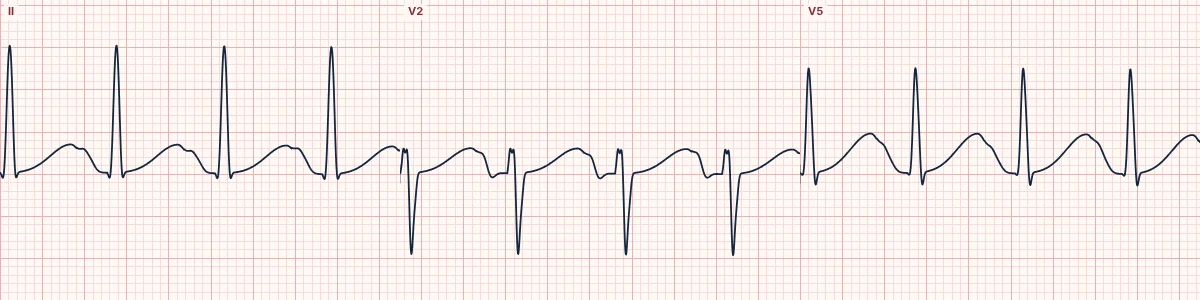
ECG changes
Sinus tachycardia from anticholinergic and alpha-blocking effects, a prolonged QT and occasionally mild QRS widening.
Why the QT can mislead
Above about 100/min Bazett's formula overcorrects, so the printed QTc looks alarming. Plotting the measured QT against the heart rate on a QT nomogram, or correcting with Fridericia, gives a truer picture of the risk.
Why it matters
Most patients do well with supportive care; low blood pressure and airway protection are the main problems. Arrhythmia risk is low but rises if the rate slows or other QT-prolonging drugs or low electrolytes are present.
About the demonstration
The tracing shows sinus tachycardia with a long QT. Measure the QT yourself with the calipers and compare corrections.
How to read it
- Measure the QT yourself and correct with Fridericia or a nomogram.
- Repeat as the rate changes.
- Check potassium and magnesium.
Pitfalls
- Relying on the machine's Bazett QTc at a fast rate.
Frequently asked questions
Quetiapine toxicity: what is the key idea?
Quetiapine overdose typically causes sinus tachycardia and a QT that looks long, with low blood pressure and sedation. Torsades is uncommon, partly because the fast rate protects against it.
Quetiapine toxicity: what are the key numbers?
Rhythm: Sinus tachycardia; QT: Prolonged; Bazett overestimates at fast rates; Torsades: Uncommon.
Quetiapine toxicity: how do you apply it to an ECG?
Measure the QT yourself and correct with Fridericia or a nomogram. Repeat as the rate changes. Check potassium and magnesium.
Quetiapine toxicity: what are the common pitfalls?
Relying on the machine's Bazett QTc at a fast rate.