
Sinus
Sinus tachycardia
Sinus rhythm faster than 100/min. It is the heart's normal response to a demand such as pain, fever, blood loss or hypoxia, not a primary rhythm problem.
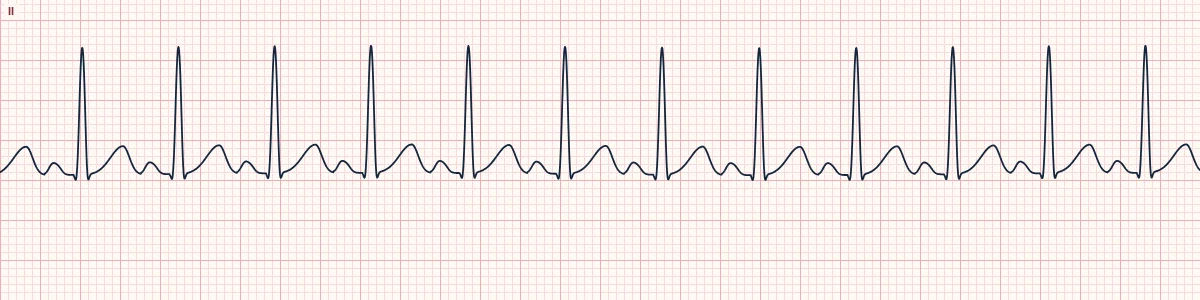
What the heart is doing
Sympathetic drive makes the sinus node fire faster than 100/min. Conduction through the atria, AV node and ventricles is otherwise normal, with a shorter cycle and shorter QT.
Why it looks this way
This is sinus tachycardia because upright P waves precede every narrow QRS with a constant PR, and the regular rate is above 100/min.
Why it matters
A sign, not a diagnosis. Treat the underlying cause; slowing a compensatory tachycardia with drugs or cardioversion can be harmful. An unexplained persistent rate deserves a search for bleeding, sepsis or embolism.
What to look for
- Find the P wave: at fast rates it climbs onto the end of the preceding T wave.
- Watch the rate over time. Sinus tachycardia drifts gradually; re-entrant SVT starts and stops abruptly.
- Ask what the patient needs the fast rate for before you blame the heart.
Frequently asked questions
What are the ECG criteria for sinus tachycardia?
Rate: > 100/min, rarely above about 220 minus age. Rhythm: regular; speeds up and slows down gradually. P waves: upright in II, one before every QRS. PR interval: 120–200 ms, often at the short end. QRS: narrow (< 120 ms).
How is sinus tachycardia identified on an ECG?
This is sinus tachycardia because upright P waves precede every narrow QRS with a constant PR, and the regular rate is above 100/min.
What can sinus tachycardia be mistaken for?
Atrial flutter 2:1: fixed rate near 150/min with a second flutter wave hidden in the T wave. AVNRT: abrupt onset, fixed rate, no visible P wave before the QRS. Focal atrial tachycardia: abnormal P-wave shape or axis.
What causes sinus tachycardia?
Common causes: pain, anxiety, exertion; fever and sepsis; hypovolemia and hemorrhage; hypoxia, pulmonary embolism; stimulants, caffeine, withdrawal states; and anemia, hyperthyroidism.