
Sinus
Draft — pending owner review
Sick sinus syndrome (tachy-brady)
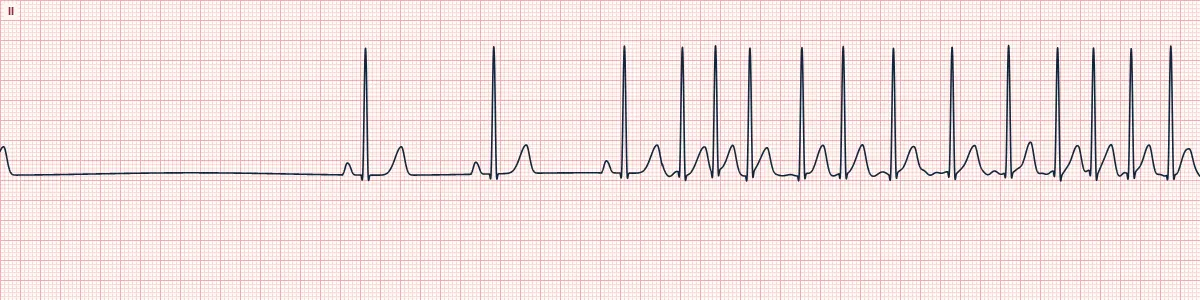
Sick sinus syndrome in its tachy-brady form: slow sinus beats alternate with bursts of an atrial tachyarrhythmia, and a long pause follows when the fast rhythm stops.
What the heart is doing
A diseased sinus node fires slowly and recovers poorly. During an atrial tachyarrhythmia it is suppressed (overdrive suppression), so when the burst ends the node takes seconds to fire again, leaving a long pause.
Why it looks this way
This is sick sinus syndrome (tachy-brady) because slow sinus beats alternate with bursts of atrial fibrillation, and each burst ends in a long pause before the next sinus beat.
Why it matters
Causes palpitations, dizziness and syncope. Rate-slowing drugs for the fast phase can deepen the slow phase, so many patients need a permanent pacemaker before the tachycardia can be treated. Correlate symptoms with the rhythm.
What to look for
- Read a long strip: the diagnosis is the sequence, not any single beat.
- Measure the pause after the fast rhythm stops; a pause of 3 s or more is significant.
- Look for slow sinus beats or junctional escape beats between bursts.
Frequently asked questions
What are the ECG criteria for sick sinus syndrome (tachy-brady)?
Rate: slow sinus rate, with fast bursts (often > 120/min). Rhythm: irregular: sinus, then a burst, then a pause. P waves: normal sinus P waves between bursts; none during AF. Pause: often 3 s or longer after the burst ends. QRS: narrow unless there is a bundle branch block.
How is sick sinus syndrome (tachy-brady) identified on an ECG?
This is sick sinus syndrome (tachy-brady) because slow sinus beats alternate with bursts of atrial fibrillation, and each burst ends in a long pause before the next sinus beat.
What can sick sinus syndrome (tachy-brady) be mistaken for?
Paroxysmal atrial fibrillation alone: no pause or slow sinus rhythm between bursts. Sinus pause / arrest: pauses without any fast atrial rhythm. Blocked premature atrial complexes: an early P wave sits in the T wave before each pause.
What causes sick sinus syndrome (tachy-brady)?
Common causes: age-related fibrosis of the sinus node and atria; ischemic heart disease; cardiomyopathy and infiltrative disease; cardiac surgery; and drugs that slow the sinus node (worsen it).