
Chamber enlargement
Left ventricular hypertrophy with strain
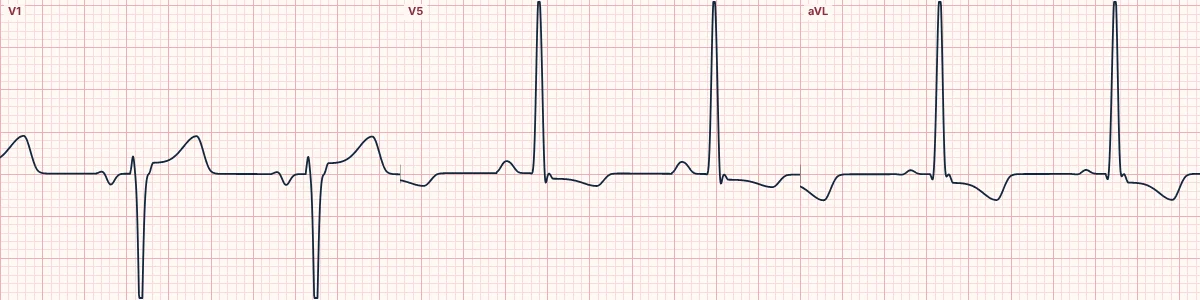
Thickened left ventricular muscle produces abnormally large QRS voltages. The strain pattern adds ST depression and T inversion in the lateral leads.
What the heart is doing
More left ventricular muscle generates larger leftward, posterior forces and takes slightly longer to activate. Repolarization of the thick wall is reversed, turning the ST–T away from the QRS.
Why it looks this way
This is LVH with strain because voltage criteria are met and the lateral leads show downsloping ST depression with asymmetric T inversion.
Why it matters
A marker of chronic pressure or volume load and a higher risk of heart failure, arrhythmia and ischemia. Strain changes can imitate or hide ischemia, so compare with previous ECGs.
What to look for
- Add the deepest S in V1 to the tallest R in V5 or V6: 35 mm or more suggests LVH.
- Strain T waves slope down slowly and return quickly; ischemic T waves are symmetric.
- Expect matching left atrial enlargement.
Frequently asked questions
What are the ECG criteria for left ventricular hypertrophy with strain?
Voltage: S in V1 + R in V5 or V6 ≥ 35 mm, or R in aVL ≥ 11 mm. ST–T (strain): downsloping ST depression and asymmetric T inversion in I, aVL, V5–V6. V1–V3: ST elevation proportional to the deep S wave. Axis: normal or leftward. QRS: slightly prolonged (< 120 ms).
How is left ventricular hypertrophy with strain identified on an ECG?
This is LVH with strain because voltage criteria are met and the lateral leads show downsloping ST depression with asymmetric T inversion.
What can left ventricular hypertrophy with strain be mistaken for?
LBBB: QRS 120 ms or more with no septal q waves. Lateral ischemia: horizontal ST depression or symmetric T inversion, changing over time. Anterior STEMI: V1–V3 elevation out of proportion to the S wave.
What causes left ventricular hypertrophy with strain?
Common causes: long-standing hypertension; aortic stenosis; aortic or mitral regurgitation; hypertrophic cardiomyopathy; and athletic training (voltage without strain).