
Paper and measurement
A systematic approach to any ECG
The same order every time
Reading every ECG in the same order stops the obvious finding from hiding the important one. Start with the patient and the recording, then rate, rhythm, axis, intervals and the waves.
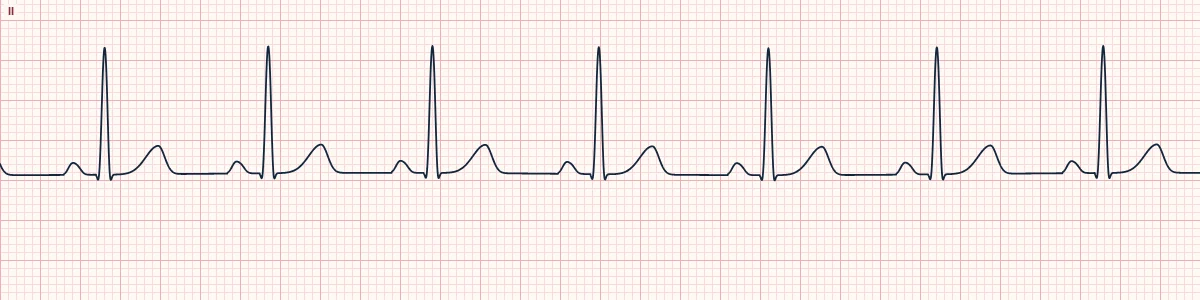
Before the waves
Confirm the patient's name and the time, why the ECG was taken, and the calibration and paper speed. Compare with a previous ECG if one exists: change matters more than any single finding.
Rate and rhythm
Count the ventricular rate. Decide whether the rhythm is regular, look for P waves and their relationship to each QRS, and name the rhythm only after describing what you see.
Axis and intervals
Find the frontal axis from leads I and aVF. Measure the PR, QRS and QTc. A long PR, a wide QRS or a long QTc each narrows the diagnosis.
Morphology
Look at P wave shape and size, QRS voltage and Q waves, R-wave progression across the chest leads, then the ST segments and T waves lead by lead, grouping leads by territory.
Finish with the patient
Write an interpretation that you can support with two findings, say what remains uncertain, and decide what the patient needs. A normal ECG never excludes a sick patient.
How to read it
- Use the same order on every ECG, even when the diagnosis seems obvious.
- Describe before you name.
- Compare with an old ECG whenever you can.
Pitfalls
- Satisfaction of search: finding one abnormality and stopping. Finish the sequence.
- Computer interpretations miss and invent findings; read the tracing yourself.
Frequently asked questions
A systematic approach to any ECG: what is the key idea?
Reading every ECG in the same order stops the obvious finding from hiding the important one. Start with the patient and the recording, then rate, rhythm, axis, intervals and the waves.
A systematic approach to any ECG: what are the key numbers?
1: Patient, indication, calibration; 2: Rate; 3: Rhythm; 4: Axis; 5: Intervals: PR, QRS, QTc; 6: P, QRS, ST, T and U morphology; 7: Compare and conclude.
A systematic approach to any ECG: how do you apply it to an ECG?
Use the same order on every ECG, even when the diagnosis seems obvious. Describe before you name. Compare with an old ECG whenever you can.
A systematic approach to any ECG: what are the common pitfalls?
Satisfaction of search: finding one abnormality and stopping. Finish the sequence. Computer interpretations miss and invent findings; read the tracing yourself.