
Paper and measurement
Working out the heart rate
Three methods
The rate is the number of QRS complexes per minute. Use large boxes for a regular rhythm, small boxes for precision, and a six-second count for an irregular one.
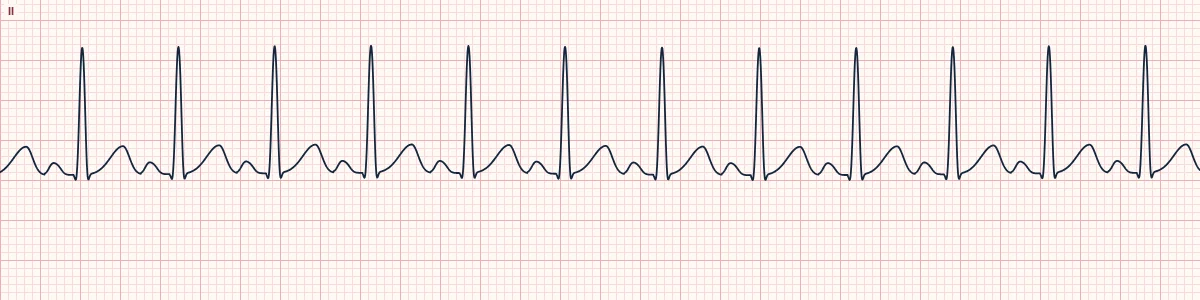
Regular rhythm: 300 rule
Divide 300 by the number of large boxes between two R waves. One box is 300/min, two is 150, three is 100, four is 75, five is 60 and six is 50. It is quick but rough between the lines.
Regular rhythm: 1500 rule
Divide 1500 by the number of small boxes in one R–R interval. This is the most precise paper method, and it is what the calipers on the live tracing do for you.
Irregular rhythm: six-second count
Count the QRS complexes in six seconds (30 large boxes) and multiply by ten. Single R–R intervals mislead in atrial fibrillation and other irregular rhythms, so always count over a longer stretch.
Atrial and ventricular rates
When P waves and QRS complexes are not linked one to one, as in AV block or flutter, count each separately. A regular atrial rate of 300 with a ventricular rate of 150 is the classic signature of 2:1 flutter.
How to read it
- Decide whether the rhythm is regular before choosing a method.
- For a regular rhythm, count large boxes between consecutive R waves.
- For an irregular rhythm, count complexes over six seconds and multiply by ten.
Pitfalls
- Tall T waves or pacing spikes can be double-counted by monitors.
- A rate of exactly 150 should always prompt a search for hidden flutter waves.
Frequently asked questions
Working out the heart rate: what is the key idea?
The rate is the number of QRS complexes per minute. Use large boxes for a regular rhythm, small boxes for precision, and a six-second count for an irregular one.
Working out the heart rate: what are the key numbers?
Normal: 60–100/min; Bradycardia: < 60/min; Tachycardia: > 100/min; Sequence: 300 · 150 · 100 · 75 · 60 · 50.
Working out the heart rate: how do you apply it to an ECG?
Decide whether the rhythm is regular before choosing a method. For a regular rhythm, count large boxes between consecutive R waves. For an irregular rhythm, count complexes over six seconds and multiply by ten.
Working out the heart rate: what are the common pitfalls?
Tall T waves or pacing spikes can be double-counted by monitors. A rate of exactly 150 should always prompt a search for hidden flutter waves.