
Atrial
Atrial fibrillation with slow ventricular response
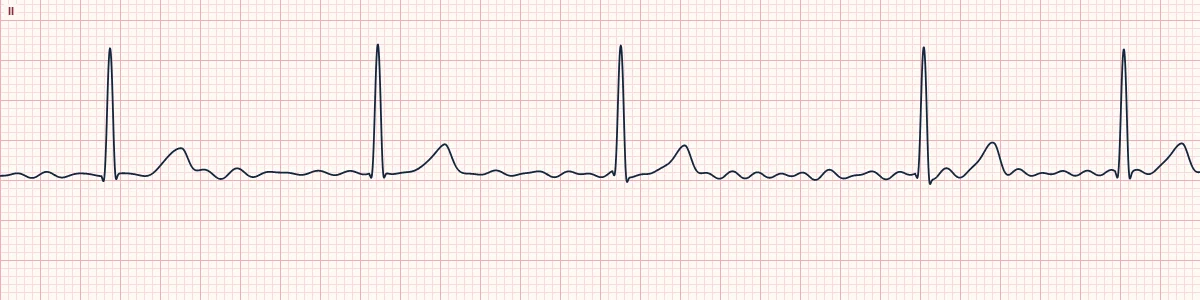
Atrial fibrillation with a ventricular rate below 60/min, because the AV node is diseased or heavily suppressed by drugs.
What the heart is doing
The atria fibrillate as usual, but a depressed AV node blocks nearly all impulses. Only occasional wavelets get through, at random intervals, giving a slow irregular ventricular rhythm.
Why it looks this way
This is atrial fibrillation with slow ventricular response because there are no P waves and the irregularly irregular narrow QRS rate is under 60/min.
Why it matters
Suspect excess rate-controlling medication or conduction disease. Symptomatic patients are managed as for other bradycardias while the cause, especially drug toxicity or hyperkalemia, is sought.
What to look for
- Long, unequal R–R intervals with a wavy baseline and no P waves between them.
- Check that the R–R intervals really vary. A slow, perfectly regular rhythm in AF means complete AV block.
- Long pauses give a clear view of the fibrillatory waves.
Frequently asked questions
What are the ECG criteria for atrial fibrillation with slow ventricular response?
Rate: ventricular < 60/min. Rhythm: irregularly irregular. P waves: none; fibrillatory waves, often coarse. PR interval: not measurable. QRS: narrow (< 120 ms).
How is atrial fibrillation with slow ventricular response identified on an ECG?
This is atrial fibrillation with slow ventricular response because there are no P waves and the irregularly irregular narrow QRS rate is under 60/min.
What can atrial fibrillation with slow ventricular response be mistaken for?
AF with complete AV block: the slow rhythm is perfectly regular. Junctional escape rhythm: regular, with a flat baseline. Sinus bradycardia with artifact: P waves can be found before each QRS.
What causes atrial fibrillation with slow ventricular response?
Common causes: beta-blockers, calcium-channel blockers; digoxin toxicity; AV node disease; hypothermia; high vagal tone; and ischemia, hyperkalemia.